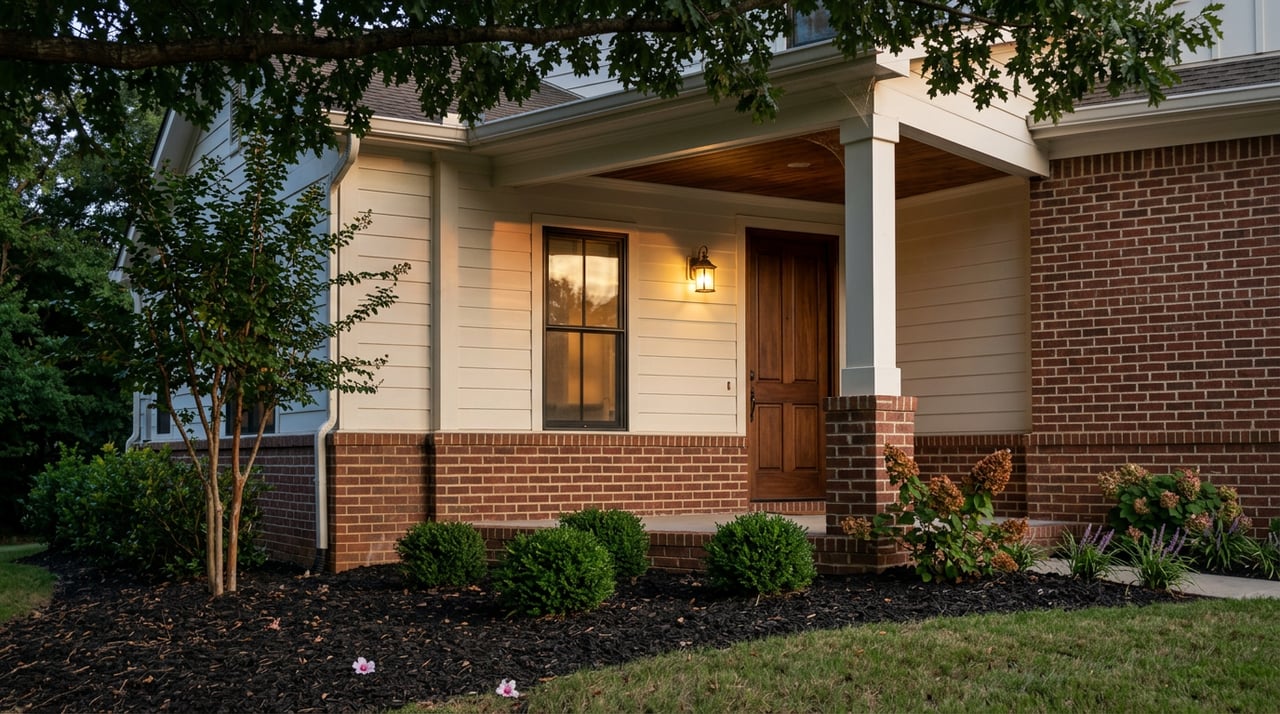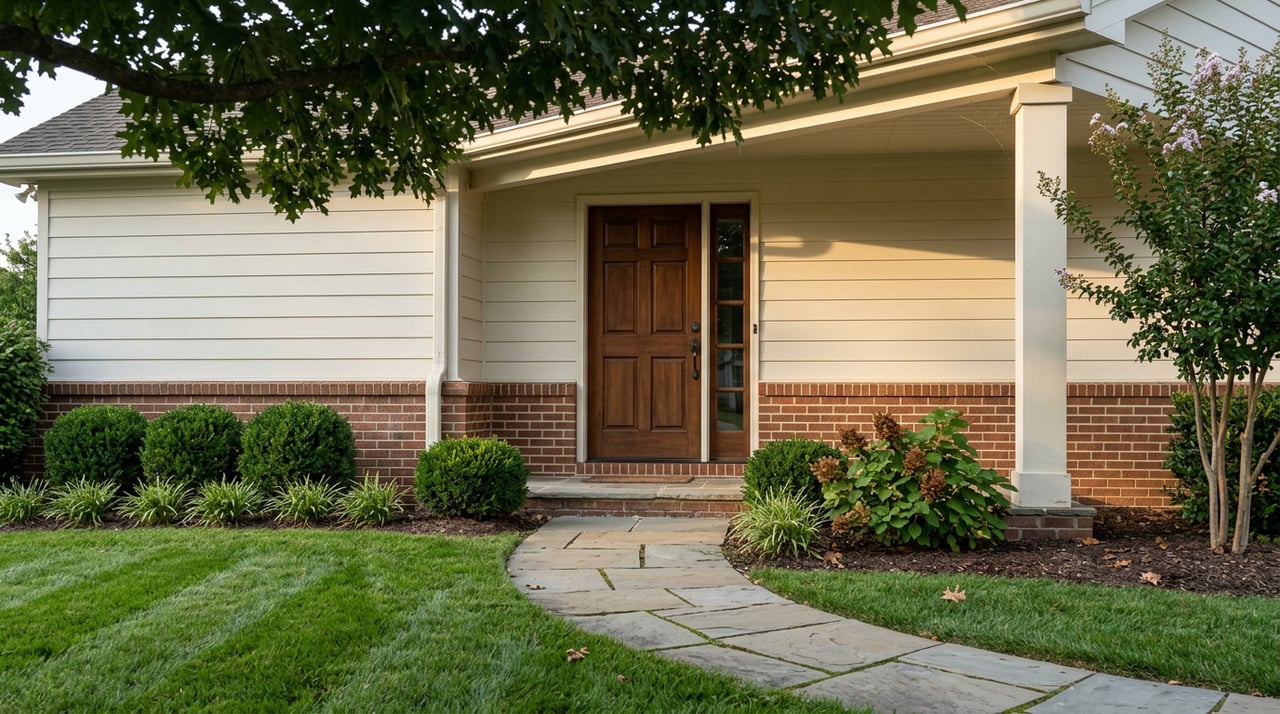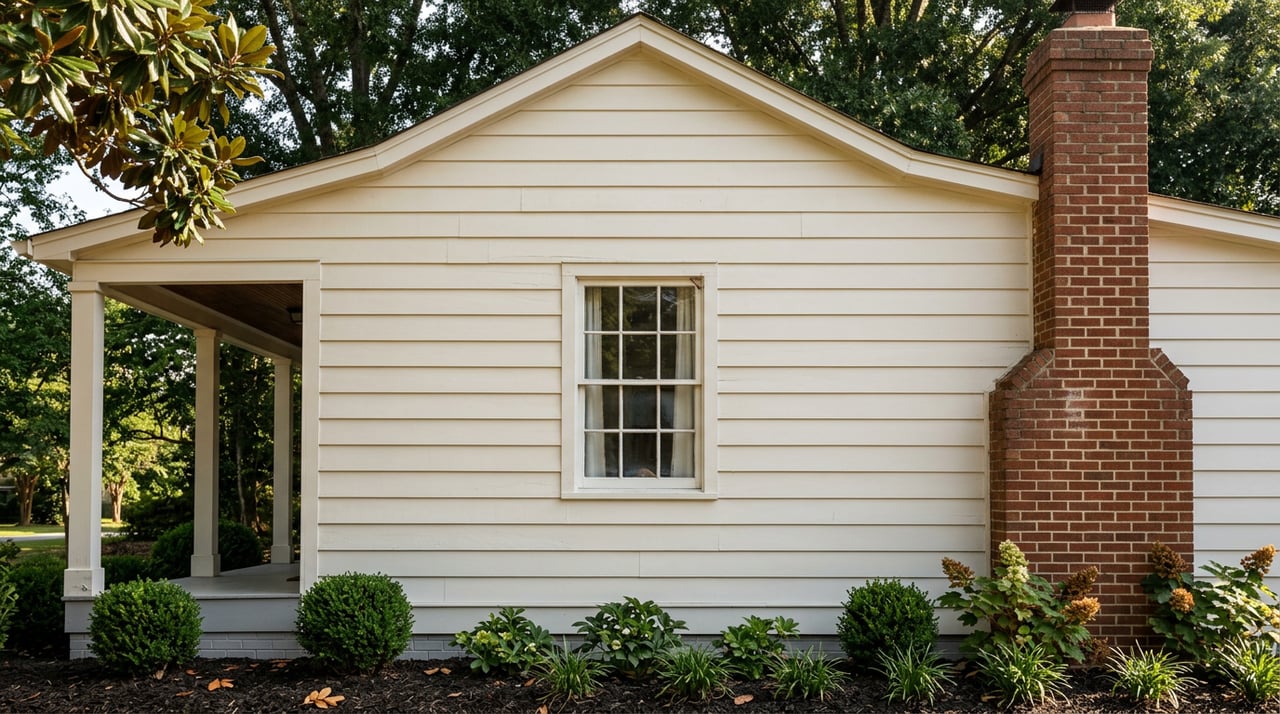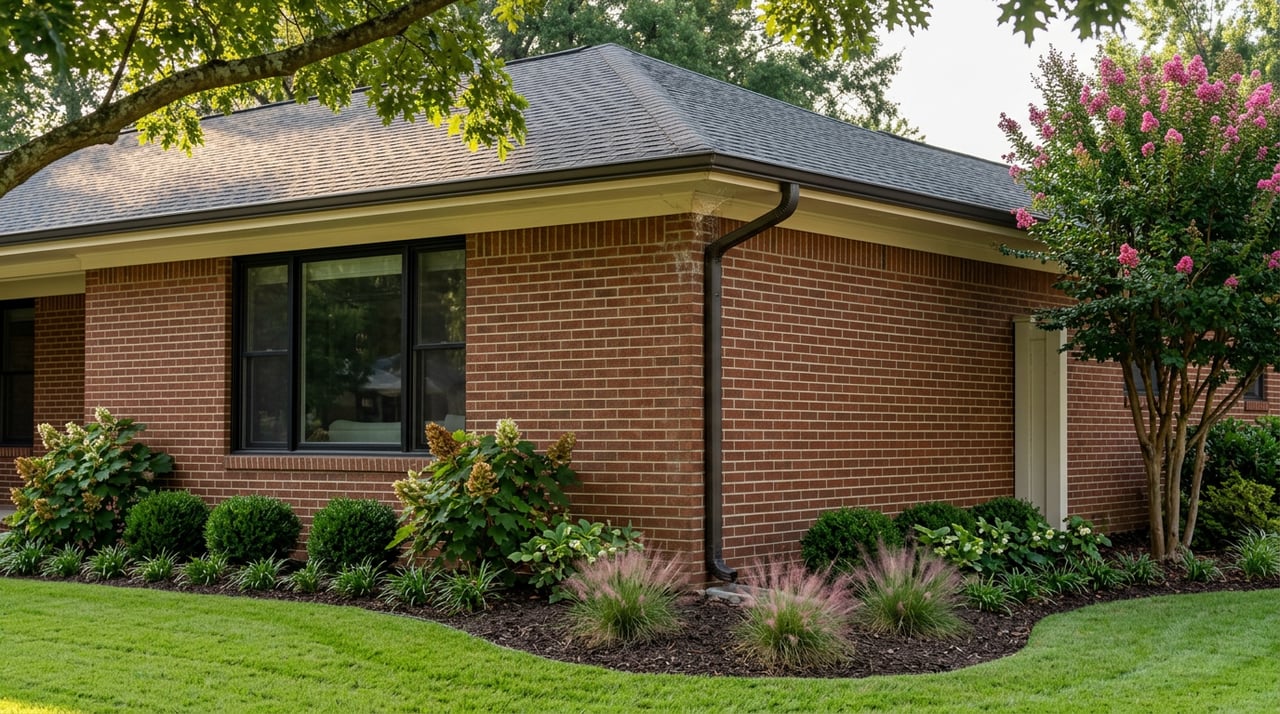
If you own a 1970s ranch off South Union Street or a mid-1990s split-level near Poplar Tent Road, the buyer walking through your open house this weekend is not comparing your home to another resale down the block. They are comparing your monthly payment to a new build in Cannon Run or Annsborough Park where the sticker looks $75,000 higher but the payment lands lower.
That gap is where mispriced Concord resales sit for 91 days.
The buyer is not shopping price. They are shopping payment.
Concord's builder pipeline is deep enough right now that any qualified buyer touring resale inventory has also walked a model at Afton Ridge, Christenbury, or one of the M/I Homes and Pulte communities along the Poplar Tent corridor. What that buyer saw on the flyer was not a base price. It was a payment.
Builders including D.R. Horton, M/I Homes, Eastwood, Century Communities, LGI, Niblock, and Pulte are all active in Concord in mid-2026, and each is layering some combination of a temporary rate buydown, permanent points, closing-cost credit, and design-center allowance on top of a base price that rarely moves. The mechanics are straightforward: a 2-1 buydown drops the rate 2 percent in year one and 1 percent in year two before returning to the note rate, and a 3-2-1 does the same over three years, with the builder funding the difference at closing. Kiplinger's June 2026 explainer on builder mortgage incentives lays out the same structure in the national market.
Here is what that means at your kitchen table, using a $450,000 new build with a 3-2-1 buydown against a $375,000 resale at market rate:
| Property | Sticker | Year-One Rate (illustrative) | Approx. Year-One Payment (P&I, 10% down) |
|---|---|---|---|
| New build in Cannon Run corridor | $450,000 | ~3.75% | ~$1,875 |
| Older resale, similar square footage | $375,000 | ~6.75% | ~$2,190 |
The resale looks cheaper on Zillow. The new build feels cheaper on the closing disclosure. That is the entire game.
Why the builder next door will not just cut price
The instinct for a resale seller watching new-construction competition is to assume the builder will eventually blink and cut the sticker. They will not, and the reason is structural.
A recorded sale at a lower base price becomes a comp that pulls down the appraisal on every remaining lot in the community and every future phase. Movement Mortgage's June 2026 breakdown of builder incentives spells this out plainly: incentives let a builder advertise a lower payment without officially reducing price, so the buyer gets a better deal and the community keeps its recorded value. That is why the $30,000 in value shows up as a rate buydown or a design-center credit rather than a $30,000 price cut on the contract.
For a Concord resale seller, this has one uncomfortable implication. The builder down the road will out-compete you on payment indefinitely. You are the one who has to reprice, because you are the only party in the transaction with a comp problem you cannot manufacture your way out of.
What the July 2026 numbers say once you read them properly
The headline data on Concord in mid-2026 looks contradictory until you split it. Redfin's March 2026 read had the median sale price at $375,000, down 3.8 percent year over year, with homes sitting a median 91 days on market against 56 days the prior year. Houzeo's early 2026 snapshot showed roughly 3.4 months of supply and a 66.5-day median time on market. As of July 2026, Resideline's live tracking of Concord had 45 active listings against 25 pending, a median active listing at $560,000, and a median closed price of $363,000 across 660 recent transactions.
The ask-to-closed gap, $560,000 versus $363,000, is not a market forecast. It is a mix warning. The homes currently listed are a different product than what is actually trading. Newer inventory at higher price points is being asked, and older inventory at lower price points is being bought once it is priced correctly.
That is consistent with what agents and cash buyers working the older parts of Concord have reported through 2026: the Afton Ridge and Christenbury submarkets, plus the newer Poplar Tent developments, are moving move-in-ready product in roughly 30 to 45 days, while pre-1980 stock in the South Union and Church Street corridors is flat to slightly declining and sitting well past the citywide median. The city is not a single market. It is two markets stacked into one zip code.
The renovate-or-list-as-is decision, done with numbers
The question every older-Concord seller asks first is whether to spend $25,000 to $60,000 on paint, flooring, kitchen refresh, and HVAC before listing. There is a defensible answer, and it comes from running the math against the after-repair value, not from staging photos on Pinterest.
A workable pre-listing sequence:
- Pull three closed comps within a one-mile radius, filtered to homes sold in the last 120 days that were fully updated. That is your after-repair value ceiling.
- Subtract a realistic renovation scope, quoted by two Cabarrus County contractors, not one.
- Subtract 6 to 8 percent for combined commission, closing costs, and seller concessions typical of this market cycle.
- Subtract carrying costs for the additional 60 to 90 days you will be out of the home during work, including mortgage, taxes, insurance, and utilities.
- Compare the net to what an as-is sale, priced against the builder-payment math above, would clear today.
For homes with an after-repair value under roughly $220,000, that calculation almost never favors renovating before listing, because the fixed costs eat the delta. Above $400,000 the math often flips, because kitchen and primary bath updates translate directly into appraised value and payment-tolerant buyers. Between those two brackets, it is a case-by-case call that depends on how much of the scope is cosmetic versus mechanical.
A pre-listing diagnostic in five questions
Before you settle on a list price, walk through these:
- Which builder communities within a five-mile drive currently have standing inventory? Standing inventory carries daily holding cost for the builder, which is where the largest buydowns and credits show up.
- What is the year-one effective payment on the closest comparable new build after the builder's advertised incentive? That is your competitive payment, not your competitive price.
- Has any home on your street closed in the last 90 days, and at what condition? A single closed sale on your block is worth more than ten Redfin estimates.
- If you list as-is at a price 5 to 8 percent below the last three unrenovated closings, do you clear your mortgage plus costs? If yes, that is a floor worth knowing.
- Are you listing before or after quarter-end? Builders sharpen incentives at the end of March, June, September, and December to hit quotas. Listing into the first two weeks of a quarter, when builder promos are freshest, is the hardest window for a resale.
FAQ
Do builder incentives actually appraise into the deal, or is the buyer just financing a higher balance? Both can be true. A rate buydown funded by the builder is a real reduction in the buyer's payment for the buydown period, and it does not add to the loan balance. A design-center credit installed before appraisal usually appraises. What does not appraise cleanly is a base price that has been quietly raised to fund the incentive stack, which is why serious buyers with independent lenders often catch what preferred-lender buyers do not.
Should I hire an inspector before I list? For pre-1980 Concord stock, yes. The three items that consistently kill deals in older Concord neighborhoods are cloth-wrapped wiring, cast-iron drain lines that have failed at the transition to city sewer, and undocumented additions that never cleared permit. Surfacing those on your terms is cheaper than surfacing them during a buyer's due diligence window.
Is this a bad time to sell an older Concord home? No, it is a time that requires precise pricing. The Concord market is not falling, it is bifurcating. Move-in-ready product in the newer submarkets is transacting in roughly 30 to 45 days as of mid-2026. Older stock priced against the buyer's payment math, rather than against last year's comps, still clears within the citywide 66- to 91-day window. Older stock priced against a memory of 2022 sits.
What about waiting until rates drop? The seller narrative on rate cuts assumes builder incentives disappear when rates fall. They historically compress rather than vanish, and a rate drop pulls more first-time and move-up buyers into new-build showrooms before it pulls them into resale open houses. Waiting is a bet that resale demand recovers faster than builder marketing budgets.
If you are weighing a listing decision on a Concord home built before 2000, the highest-value hour you can spend is one at a builder model in Cannon Run, Annsborough Park, or Christenbury with a calculator in your hand. That is where your buyer is, and that is the math your list price needs to answer. When you are ready to run that math against your specific address, Kirk Hanson and the team at Coldwell Banker CK Select build every listing strategy from the same starting point: the payment the buyer is comparing you to, and how to beat it without leaving equity on the table. Request Your Home Valuation to get the current read on your property.