The listings around Ridge Avenue and 1st, 2nd, and 3rd Streets read like the last affordable pocket in the Charlotte metro. Four-figure square footage, three-figure dollar amounts per foot, and an Amtrak platform a short walk from the front porch. Compared with a new build in a Cabarrus County subdivision, the math looks like a rounding error in the buyer's favor.
It usually isn't. The mill-village discount is real, but it is priced against a very specific set of unknowns, and reading the number without reading the block will misprice the deal in both directions.
The thesis, stated plainly
The listing price on a Kannapolis mill-village house is mostly a land number wearing a house-shaped costume. Downtown revitalization has lifted the ground under these blocks faster than the improvements sitting on top of them have been documented, inspected, or brought current. When a buyer treats the per-square-foot figure as a proxy for value, they are quietly agreeing to absorb whatever a century of company-town ownership, four corporate transitions, and unpermitted DIY have layered into the structure.
The cheap thing about a mill house is rarely the house. It is the paper trail.
Where the medians actually land
Two data services put current Kannapolis values in the same neighborhood. The Zillow Home Value Index for Kannapolis sits at $283,833, up 0.5% over the past year, with homes going to pending in about 21 days, updated 5/31/2026. Redfin's most recent monthly reads a median sale price of $303K, with a median price per square foot of $210, up 3.7% year over year. For statewide context, North Carolina Realtors reports the state has shifted into a balanced market with 5.86 months of inventory and a median sales price of $382,500.
Those citywide numbers hide the story. Kannapolis is not one market. It is at minimum three: newer subdivision product on the Cabarrus and Rowan edges, downtown-adjacent multifamily and townhomes tied to the North Carolina Research Campus, and the original mill village. The mill village pulls the median down and the per-foot number up because the houses are small, the lots are deep, and the location premium is real.
What "mill house" actually means on the ground
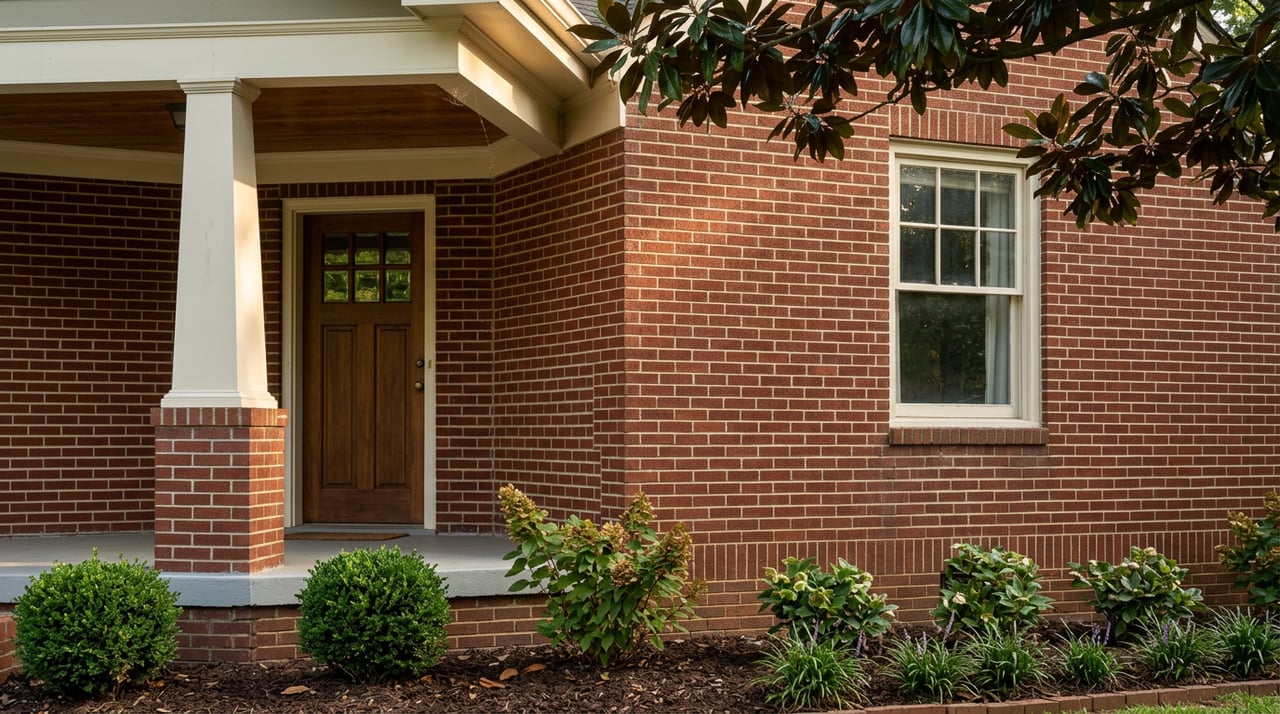
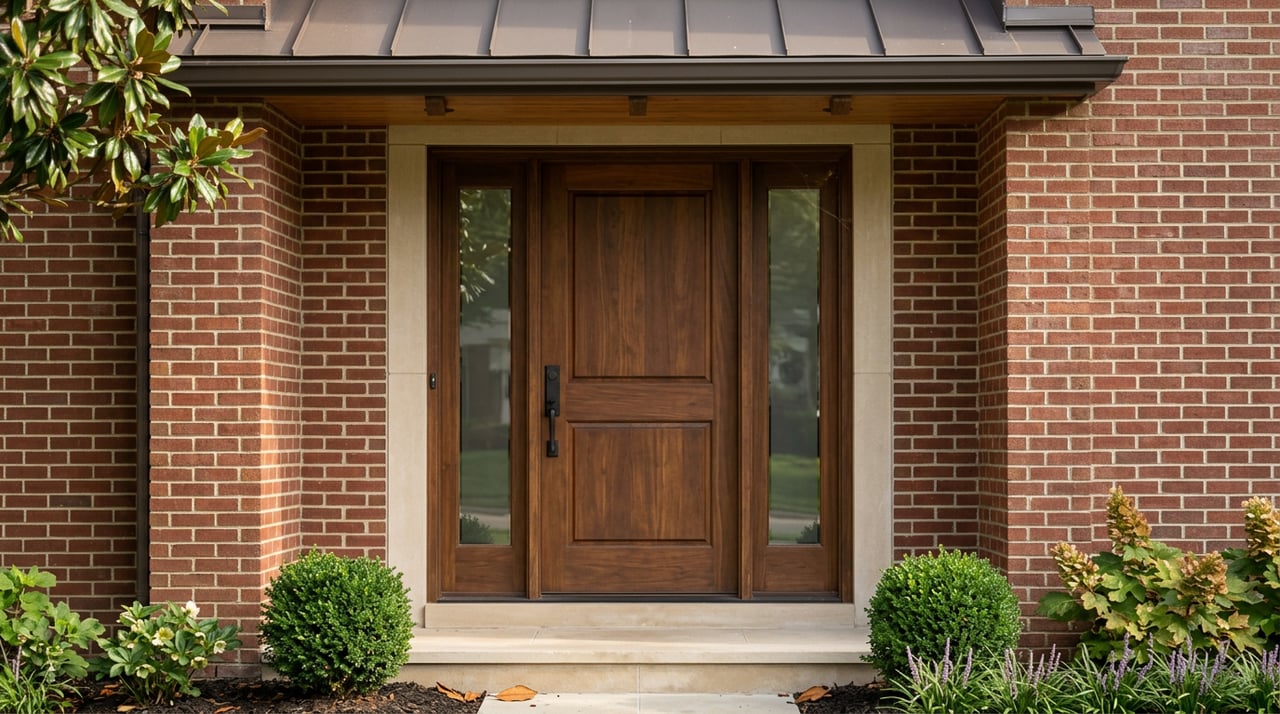
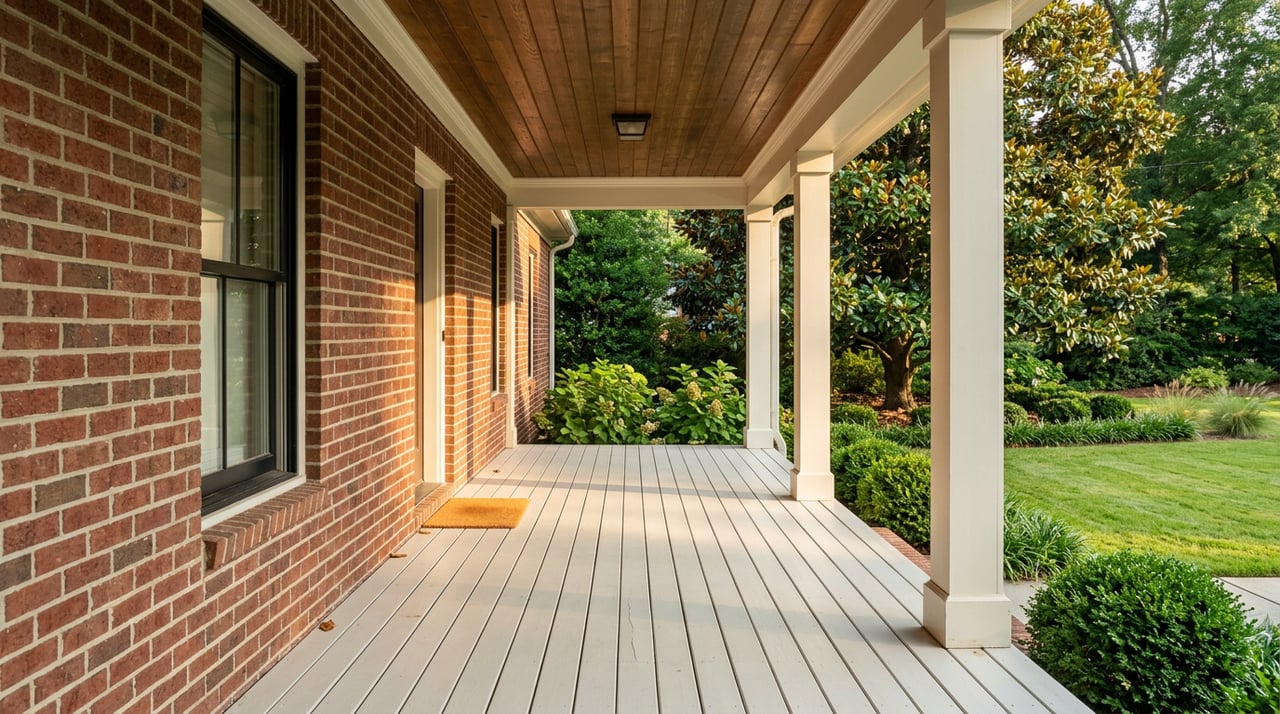
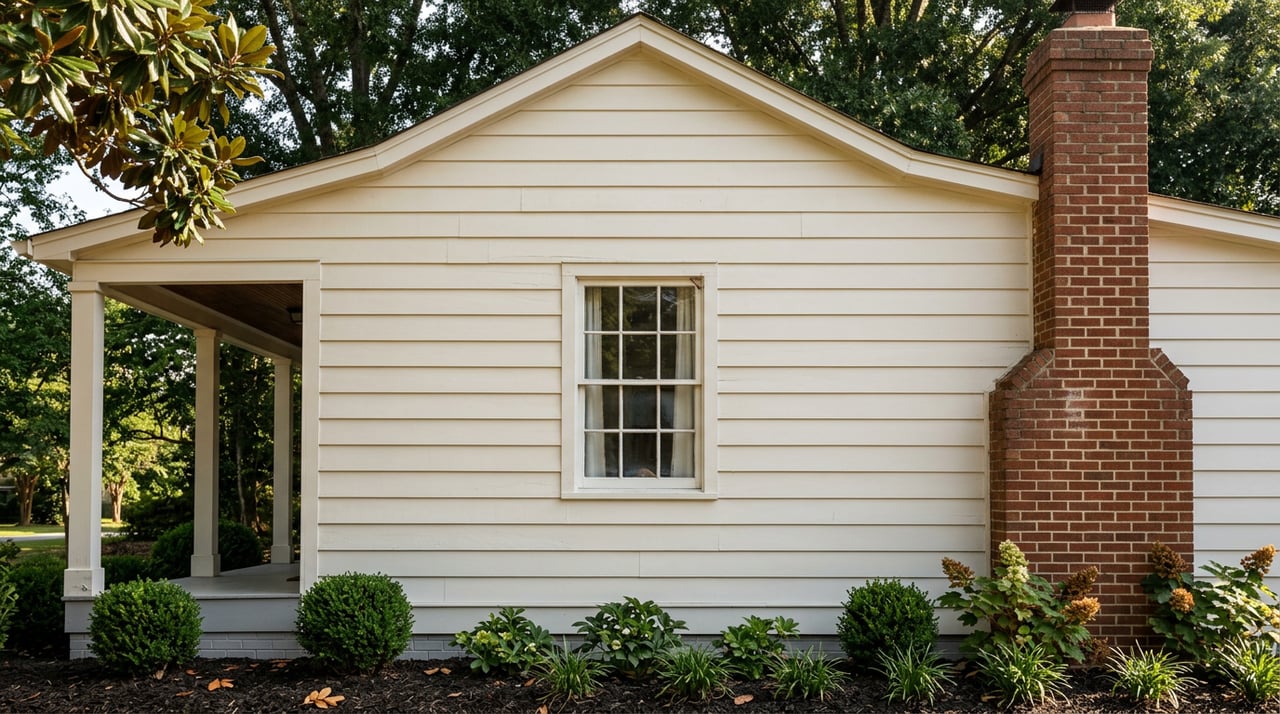
Cannon's original build-out was not one product. It was a catalog. Construction of the first 50 houses began in 1907, mostly four-room houses rented at $5 per room per month, with low-cost utilities and free garbage collection; the village climbed to over 800 units by 1920, and Cannon staff painted each house every five years and handled repairs free of charge. The houses along Ridge Avenue and 1st, 2nd, and 3rd Streets and the surrounding blocks are among the original homes built by Cannon, and while the exteriors vary, in Cannon's day they were all painted white.
The National Register survey work on comparable Cannon Mills stock catalogs the types precisely. The third type of mill house, built 1900–1906, includes one-story L-shaped frame dwellings with side-gable roofs, symmetrical three-bay facades with four-over-four and six-over-six double-hung windows, and single interior chimneys. Buyers walking a block should expect a two-room plan hiding under a hundred years of additions, not the floor plan the MLS photos suggest.
Here is the shorthand a buyer can carry into a showing:
| Era of the improvement | What you are usually looking at | What the number on the sticker is really pricing |
|---|---|---|
| Original 1907–1920s Cannon build | Small footprint, two-to-four rooms, single chimney, deep narrow lot | Land plus the location halo, minus deferred systems |
| Company-era additions (through 1982) | Rear kitchen, bath, or bedroom bumps done by mill crews | Documented rarely; permits may not exist |
| Post-Murdock private ownership (1982 onward) | Vinyl siding, replumbs, panel swaps, second-bath additions | Quality is entirely owner-dependent |
| Post-2004 flips and rentals | Cosmetic refreshes over untouched systems | The gap between what shows and what inspects |
The paper-trail problem is the whole problem
Ordinary older-home diligence assumes a chain of individual owners who pulled permits, filed with the county, and kept receipts. Mill villages do not work that way. While the Cannon family owned the mill there was no local government, no mayor, no city council, and no city taxes; the Cannons took care of the needs, and on February 4, 1982, David Murdock paid approximately $250 million for the holdings of Cannon Mills, which included the town, homes, park lands, and mills.
That means a house built in 1912 may have had its first non-corporate deed sometime after Murdock's 1982 purchase. In December 1985 the mills were sold to Fieldcrest, on September 11, 1997, Fieldcrest sold to Pillowtex, and on July 31, 2003, Pillowtex closed in bankruptcy, putting 4,300 workers out of work. Every transition thinned institutional memory. By the time Pillowtex's 2003 closure produced the largest one-day layoff in North Carolina history, followed by Murdock buying the mill and the downtown again in 2004 and announcing the $1.5 billion North Carolina Research Campus on the site of the former mill, the operational records of who added what to which mill house had largely evaporated.
Buyers should assume that any addition, wall move, panel upgrade, or plumbing rework older than 20 years is undocumented unless proven otherwise.
What the disclosure form will and will not do for you
North Carolina is a caveat-emptor state with a mandatory form. That form is designed to accommodate exactly the situation a mill-village seller finds themselves in. Sellers of residential property are required by law to give the buyer the Residential Property and Owners' Association Statement, a four-page form provided prior to an offer to purchase, and the seller has the option of answering each question yes, no, or "no representation," so while it is a mandatory disclosure form, it does not actually mandate any disclosure because of the "no representation" option.
For a mill house that has passed through corporate hands and small landlords, "no representation" is often the honest answer. "No representation" means the seller genuinely does not know whether a defect exists, and it is a legally honest answer that is often appropriate for inherited properties, homes that were previously rented out, or situations where the seller cannot verify something without a professional inspection. The buyer's response should not be relief. It should be a longer inspection scope.
The material-era hazards worth writing into that scope are specific. Any pre-1978 improvement triggers federal lead-based-paint disclosure. In older homes, inspectors specifically look for Federal Pacific and Zinsco panels, both of which have been recalled. Anywhere a plumbing rework happened between the late 1970s and mid-1990s, polybutylene was a common plumbing material used in homes built between approximately 1978 and 1995, it degrades over time and has been associated with pipe failures, and even if the home has been fully replumbed, North Carolina disclosure rules require that polybutylene's prior presence be noted because what is inside the walls cannot be verified visually.
The halo is real, and it is what you are actually buying
The reason a mill house holds its price despite all of the above is that the ground under it has been repriced by downtown. The rebuild is not speculative. A historic building in downtown Concord has new life as the District Exchange, a two-level retail and dining destination now open for the first time since 1977, with a lease finalized for the final vendor and 20 micro-retail spaces filled with mom-and-pop shops, and the Kannapolis downtown build-out has produced comparable anchors: shops, boutiques, eateries, and entertainment with the Swanee Music Theatre now fill the once-empty historic brick buildings, and a new sports entertainment venue, home of the Kannapolis Cannon Ballers, has been added to the downtown landscape.
Walkability to that core is what the per-square-foot number is really pricing. A buyer paying $210 per foot for a 1,000-square-foot mill house is not paying $210 for the drywall. They are paying for the fifteen-minute walk to the Cannon Ballers gate, the Gem Theatre marquee, and the Amtrak platform, and accepting the improvement as a bonus that may or may not need $60,000 of work.
A short verification list before you write
- Pull the Cabarrus County parcel record and compare current heated square footage to the original tax-card footprint. Every extra square foot is an addition to interrogate.
- Ask the seller in writing for the year and permit number of any electrical panel replacement, replumb, roof replacement, and HVAC install. Absence of an answer is an answer.
- Scope the inspection specifically for knob-and-tube remnants, Federal Pacific or Zinsco panels, cast-iron drain lines, and any polybutylene supply lines.
- Order a survey. Deep narrow mill-village lots were platted before modern lot-line practice, and driveways, sheds, and fences frequently cross where the deed says they don't.
- Confirm any short-term rental or accessory dwelling plans against current Kannapolis zoning before you underwrite that income into your offer.
FAQ
Are Kannapolis mill village homes in a designated local historic district? Kannapolis has individual National Register listings, including the Gem Theater, Meek House, and Harvey Jeremiah Peeler House on the National Register of Historic Places, but the residential mill blocks do not carry the same overlay as Concord's local historic district. That reduces exterior-alteration friction and reduces the paper trail simultaneously.
Is the per-square-foot number rising or falling? Both, depending on the block. Citywide, the median sale price per square foot in Kannapolis is $210, up 3.7% since last year. Mill-village blocks closest to the North Carolina Research Campus and the ballpark are pulling the average.
Does the "first sale of a dwelling never inhabited" disclosure exemption apply to a renovated mill house? No. Those houses have been lived in for a century. The RPOADS is required, and the seller's answer set is your read on how much diligence you need to fund yourself.
Thinking about a mill-village purchase, or weighing a Kannapolis home against a comparable subdivision property elsewhere in Cabarrus County? Kirk Hanson and the team at Coldwell Banker CK Select have walked these blocks, read these disclosures, and negotiated these inspection responses for three decades. Request Your Home Valuation to start the conversation with real numbers for your specific address.